
Cheek biting
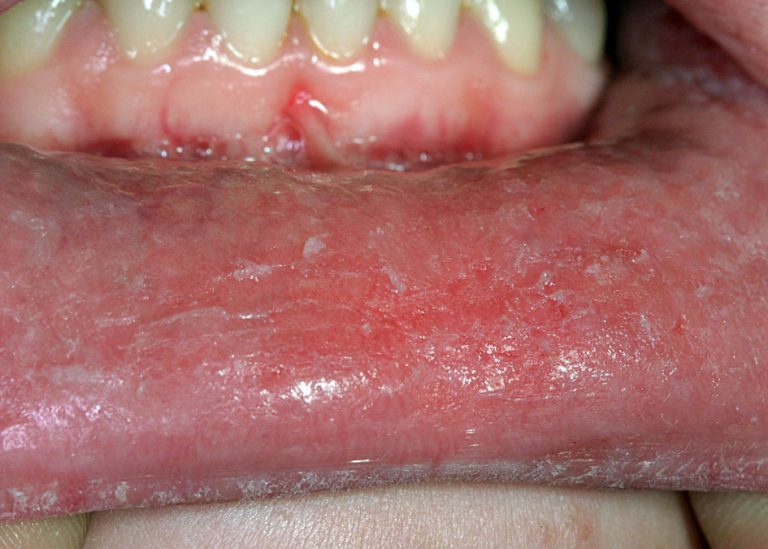
Cheek biting (as well as lip and tongue biting) is a widespread bad habit of chewing on the cheek lip or tongue. Lots of people do it unconsciously. Cheek bites are seen as small frayed whitish areas, perhaps as redness or sores, either in the cheek, lip or on the sides of the tongue. Wounds may be felt, but otherwise it is without symptoms. The cause is often stress. The condition is harmless. Maybe a nightguardwould be helpfull.
Cranker sore
Canker sores, also called aphthous ulcers, are small, shallow lesions that develop on the soft tissues in your mouth or at the base of your gums. Cranker sore is a common disorder of the mucous membrane. 15-20% of the population is bothered by them. Most often it is children and young people, but in general all ages and both sexes can get them. Cranker sores are seen as small circular wounds surrounded by a red ring and are 3-5 mm in diameter. Often, they are painful when eating. It takes from a few days up to a few weeks before the wounds heal again. They can return at different intervals, ranging from a few weeks up to a few months. The cause is unknown. There are indications that vitamin and mineral deficiencies, certain foods, food allergies, toothbrushing, menstruation, weakened immune system or stress may be the cause. There is a hereditary tendency in families. There is no effective treatment for aftermath, prevention is the best solution. Avoid using a toothpaste that contains sodium lauryl sulfate, which is a foaming agent (read the package). Rinsing with chlorhexidine 0.12%, rinsing with benzydamine or placing a local anesthetic gel may help. If you experience severe pain, it may be necessary to treat with adrenal cortex hormone. This is done under the guidance and supervision of your dentist or physician.

Actinic elastose
Elderly people, outdoor people and people who spend much time in the sun, can experience changes on their lips. Both actinic elastosis and actinic keratosis are common among these people. Actinic elastosis is seen on the transition between skin (in the face) and the lip-redness of the lips, actinic elastosis will show up as grayish changes that make the transition indistinct. There are not always symptoms, but the lips may feel dry and slightly cracked. Actinic keratosis is seen as crusting/ulceration of the lips. The disease occurs due to prolonged exposure to the sun’s UV rays. There is an increased risk of lip cancer. It is important to prevent. This is done by using a lip balm with sun factor. If you notice changes on your lips, especially if it is ulceration that has not healed after 10-14 days, or comes back in the same place, contact your dentist / doctor.
Elderly people, outdoor people and people who spend much time in the sun, can experience changes on their lips. Both actinic elastosis and actinic keratosis are common among these people.

Geographical tounge
Geographical tongue is a harmless condition that can cause some irritation. It is seen in 5-10% of the population. On the surface of the tongue, it will appear as smooth stains or small islands surrounded by slightly thickened white-yellow edges that resemble a map (hence the name geographically). The appearance of the tongue can change frequently, even during the day, and disappear completely, only to recur. Geographical tongue can be asymptomatic or cause some burning or irritation when consuming certain foods, e.g. something strong or sour. The cause is unknown, but there are indications that allergies and psoriasis may play a role. It is harmless and requires no treatment. Avoid the foods that give you irritation. Use a toothpaste without the foaming agent sodium lauryl sulfate.

Leukoplakia
Leukoplakia is seen as a white spot on the mucous membrane, and does not resemble any other disease of the oral cavity. 2-3% of the population have it. Leukoplakia can occur anywhere in the mouth, and cannot be scraped off the mucous membrane. There are no symptoms. The only known cause is smoking, but in many cases the cause cannot be identified. Smoking cessation is important. It is important that you have it checked by your dentist regularly, as leukoplakia can develop into cell changes and in some cases cause cancer of the oral cavity. Early detection is therefore important. The dentist will refer you to a specialist who will assess whether regular examinations are sufficient or whether it should be operated on. It is important that you do not miss your regular visits to the dentist every year.

Oral lichen planus
Oral lichen planus most often occurs in middle-aged and elderly people, but is also seen in children and adolescents. Ca. 2% of the population have it. The disease is seen as white markings resembling a pattern or net. It can also be seen as white dots or spots, red areas and sores. Several of these symptoms can often be found simultaneously in the mouth, most often in the cheek, but can occur throughout the whole mouth. The changes can “move around” in the mouth, change appearance and are chronic. Transient skin changes can occur on the wrists and ankles in the form of itchy rash that usually disappears within a few years. Some people may develop cell changes in the oral mucosa, so it is important to have it checked regularly by your dentist. Most people experience no symptoms, but some may experience stinging and burning sensation, and strong food can be irritating. Fungal infection can occur and this can also contribute to the symptoms. The cause is unknown, but some may have symptoms due to drugs. Others may have symptoms reminiscent of Lichen Planus where the mucous membrane is in contact with dental fillings, crowns, bridges, dentures or implants. Since the cause is unknown, the disease can not be treated either. The nuisances can be reduced by good oral hygiene, toothpaste without the foaming agent sodium lauryl sulphate, or rinse twice daily with chlorhexidine 0.12%.
