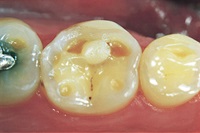
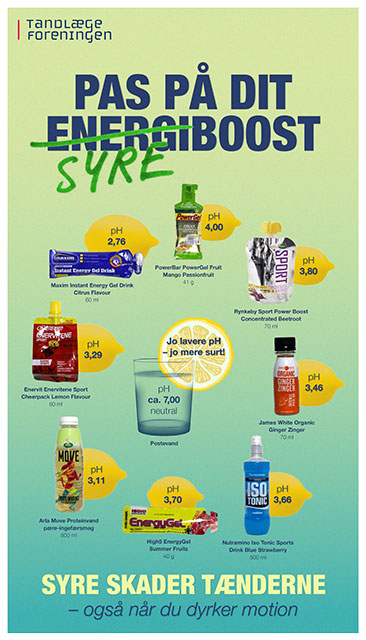
Following carbonated soft drinks, the amount of acid damage to the teeth has exploded. In addition to carbonated drinks, other foods, dry mouth, and vomiting can cause acid damage.
What is an Acid Damage?
The acid in the drinks and foods etches the outer teeth layer (enamal). The stronger an acid, and the longer the teeth are exposed, the more loss of enamel occurs. Once you have lost parts of the enamel, it will never come back.

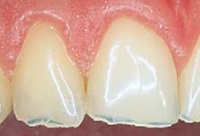
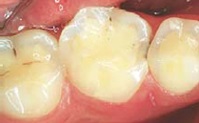
The pictures shows a clear color difference. The outermost layer, enamel, is white, the innermost layer, dentin, is yellow. When enamel disappears, dentin appears and the teeth therefore appear more yellow. On front teeth, edges may become slightly transparent, grayish and frayed.
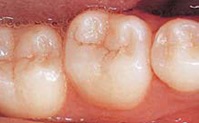
How does acid damage occur?
Acid damage occur when your teeth are too often/prolonged exposed to something acidic. In particular, beverages contain acid, including everything with carbon dioxide in (soft drinks, energy drinks, cider) but also other beverages such as juice, lemonade, iced tea and wine containing acid. Add to that acidic food, for example fruit and sour candy. In addition to food, your own stomach acid can also damage your teeth. If you often get acid reflux, or if you throw up often (perhaps in connection with an eating disorder) your teeth are very vulnerable.
Soft drinks
As described, it is especially soft drinks that are one that can be blamed. Partly because the acid is strong and because we tend to “teat” on a bottle for a long time. The longer you are about to drink your soft drink, the more and longer your teeth are exposed to acid and therefore constantly are in an ‘acid bath’.
A soft drink does not need to taste acidic for there to be acid. However, do not confuse sugar with acid. There are just as much acid in light products as in normal products. A light soda results in just as much acid damage as a normal soda.
Sour Candy
Candy with sour taste can also cause acid damage. The longer you have acidic candy in your mouth, the greater the risk of acid damage.
Fruit
Although fruits are healthy and you must, of course, keep eating them, many of them are acidic. A large intake can eventually cause damage.
Vomiting and acid reflux
If you get an acid reflux or if you throw up, it does not make the biggest damage if it is rare. If it happens often, your teeth are at risk. Stomach acid is a strong acid, and if you do not take its precautions, you can get servere erosions.

Dry mouth
Dry mouth contributes to erosions and caries. The saliva helps to protect the teeth, so if your saliva production is reduced, the acid from what you eat and drink will have much greater effect. Dry mouth may be due to medication, illness, or lack of fluid. If you quench your thirst with soft drinks, you are particularly exposed.
How does acid damage look?
Acid damage occurs gradually and slowly, and often it is not discovered until the damage has already occurred. Your dentist can see the damage before you can. In the late stages you can observe hollowed areas on the chewing surfaces. These recesses will often be more yellow than the rest of the tooth. On the front teeth, the edge will be slightly transparent, as the enamel has become thinner.
How to prevent the acid damage
The best thing to do is to avoid acidic foods as much as possible. Here are some good tips:
- Cut down on acidic soft drinks – also light products
- Drink your soft drink over a short period of time
- Swallow quickly so the drink does not flush around the entire mouth
- Drink with a straw
- If possible, drik the soft drink during a meal
- Rinse your mouth with water or milk after drinking/eating something acidic or after vomiting/acid reflux
- Seek treatment if you suffer from acid reflux or an eating disorder
In addition, here are some important advice:
- Wait an hour before brushing your teeth after you have consumed something acidic. The acid dissolves the outer layer of the enamel and if you brushes just afterwards, this outer layer is brushed away. If you wait to brush, it has the opportunity to remineralize and become hard again.
- Dont brush your teeth right before you ingest anything acidic. If you do this, you remove a protective self-forming layer the saliva made on your teeth.
- Brush your teeth twice a day
- Use a soft toothbrush and toothpaste with fluoride
- Go to the dentist regularly
Treatment
Once the damage has occurred, it cannot be corrected again. If it is discovered early enough, it can often be enough to avoid acid stuff. For minor injuries, fluorid treatment, or small plastic fillings can be an option.